Heat Safety for Athletics
Protect athletes with accurate WBGT monitoring. Meet NCAA, ACSM and NATA requirements and keep your student athletes safe during practice and competition.
Get a QuoteHeat Risks in Athletics
Outdoor Practice
Athletes train and compete under direct sun exposure during the hottest parts of summer and early fall.
Protective Equipment
Football pads, helmets, and other gear trap heat and prevent evaporative cooling.
High Intensity
Athletic activities generate extreme metabolic heat loads, especially during conditioning drills.
Artificial Turf
Synthetic turf fields can be 20-50°F hotter than natural grass, dramatically increasing radiant heat.
Young Athletes
Younger athletes may not recognize heat illness symptoms or may push through dangerous conditions.
Preseason Timing
August practices coincide with peak summer heat before athletes are fully acclimatized.
Requirements & Guidelines
NCAA Requirements
NCAA mandates WBGT monitoring and specific activity modifications based on WBGT readings. Required for all Division I, II, and III programs.
State Athletic Associations
Many state high school athletic associations have adopted WBGT-based guidelines for practice and competition decisions.
NATA Guidelines
National Athletic Trainers' Association recommends WBGT monitoring as the standard for assessing environmental heat stress in athletics.
ACSM Guidelines
The American College of Sports Medicine's position stand on exertional heat illness establishes WBGT-based thresholds for modifying or canceling training and competition.
Korey Stringer Institute
Leading authority on exertional heat illness provides evidence-based WBGT guidelines widely adopted by athletic programs.
How WBGT Protects Athletes
Field-Level Accuracy
Measure actual conditions at the practice field, including radiant heat from artificial turf that nearby weather stations miss.
Instant Readings
No warm-up time, no battery delays. Get readings immediately when conditions change during practice.
Clear Decision Points
NCAA, ACSM, NATA and state guidelines specify exact WBGT thresholds for activity modifications—no guesswork required.
WBGT Flag System Guidelines
| Flag | WBGT (Category 3 Regions) | WBGT (Category 2 Regions) | Rest Breaks | Max Practice | Equipment |
|---|---|---|---|---|---|
| Green | < 82.0°F | < 79.7°F | 3 breaks/hour (3 min each) | Normal | Normal |
| Yellow | 82.0 - 86.9°F | 79.7 - 84.6°F | 3 breaks/hour (4 min each); use discretion for intense or prolonged exercise | Normal | Normal |
| Orange | 87.0 - 90.0°F | 84.7 - 87.6°F | 4 breaks/hour (4 min each) | 2 hours max | Limited (helmet, shoulder pads, shorts only) |
| Red | 90.1 - 92.0°F | 87.7 - 89.7°F | 20 min total rest/hour | 1 hour max | None allowed |
| Black | ≥ 92.1°F | ≥ 89.8°F | N/A | Cancelled | N/A |
Category 3 regions: Southeast & Southwest U.S. · Category 2 regions: central U.S. Cooler regions use lower thresholds because athletes are less heat-acclimatized.
Source: ACSM Expert Consensus Statement on Exertional Heat Illness (2023); regional thresholds per Grundstein et al. (2015)
| Flag | WBGT Range | Rest Breaks | Max Practice | Equipment |
|---|---|---|---|---|
| White | < 82°F (27.8°C) | 3 breaks/hour (3 min each) | Normal | Normal |
| Green | 82 - 86.9°F (27.8 - 30.5°C) | 3 breaks/hour (4 min each) | Normal | Normal |
| Yellow | 87 - 89.9°F (30.5 - 32.2°C) | 4 breaks/hour (4 min each) | 2 hours max | Limited (helmet, shoulder pads, shorts only) |
| Red | 90 - 92°F (32.2 - 33.3°C) | 20 min total rest/hour | 1 hour max | None allowed |
| Black | > 92°F (33.4°C) | N/A | Cancelled | N/A |
Source: NATA Position Statement: Exertional Heat Illnesses (2015)
All guidelines assume athletes are acclimatized, fit and have no risk factors. Consult your state association or athletic trainer for specific requirements.
Recommended for Athletics
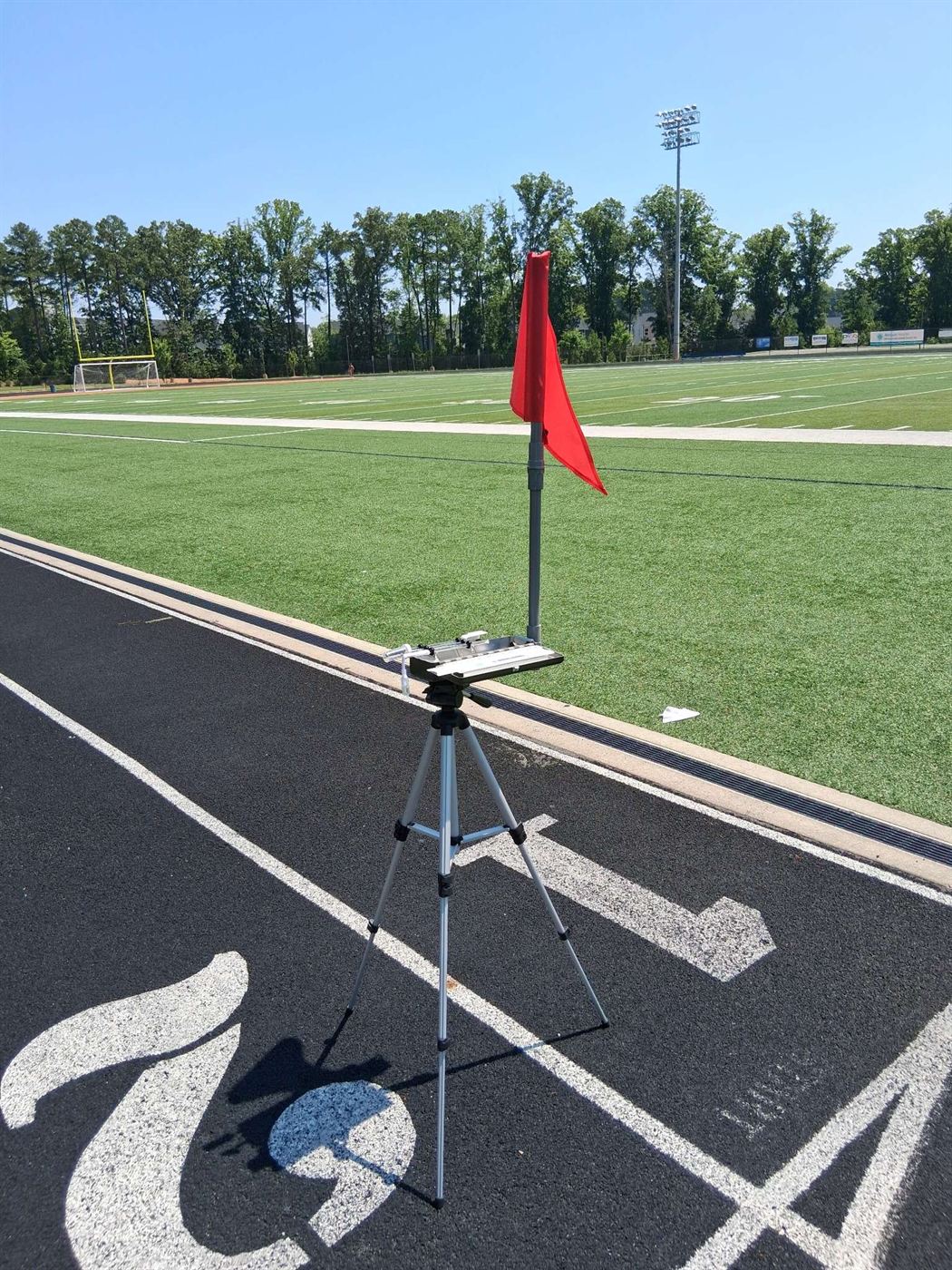
Premium WBGT Kit
Request Quote
- Everything included in the Standard WBGT Kit
- Flagpole and Mount
- 5 Colored Signal Flags
- 4oz Water Bottle (empty)
- Carrying Case for all Parts
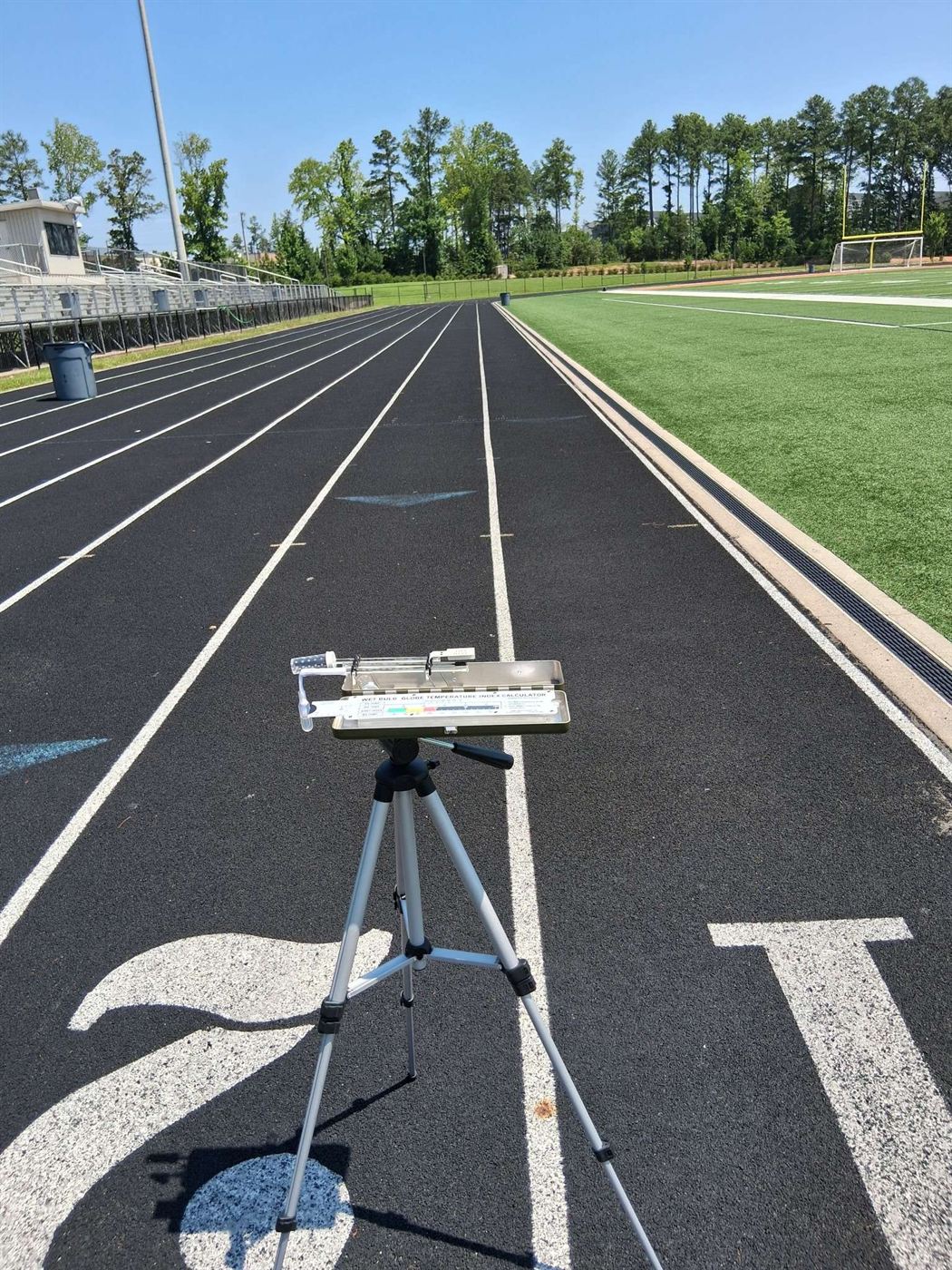
Standard WBGT Kit
Request Quote
- Complete WBGT measurement
- Tripod for field setup
- Slide rule calculator
- Spare Airflow Vial and 18" of Wet Bulb wicking
Protect Your Athletes
Get reliable WBGT monitoring that meets NCAA, ACSM and NATA requirements and keeps your student athletes safe.